
The best places to install bathroom grab bars are in and around the shower, beside the toilet, and anywhere you transfer your weight.
Prioritize the shower entry first, then the side, front, and back walls, plus a bar by the toilet for sitting and standing. Ultimately, placement should follow where your hand naturally reaches for support.
If you’d rather leave the drilling to a pro, a Handyman in Culver City, CA can make sure every bar is anchored and placed correctly.
Test Your Bathroom Routine Before Installing Grab Bars
Before drilling a single hole, walk through your normal bathroom routine and notice where your hand instinctively reaches.
Pay close attention to transfer moments:
- sitting down and rising from the toilet
- stepping over the tub ledge
- and going from sitting to standing in the shower
Rehearse as if you felt tired, weak, or dizzy. Better yet, have the actual user mimic showering, washing hair, reaching for shampoo, twisting the handles, and consider an occupational therapist’s assessment for a personalized plan.
Where to Place Grab Bars in the Shower
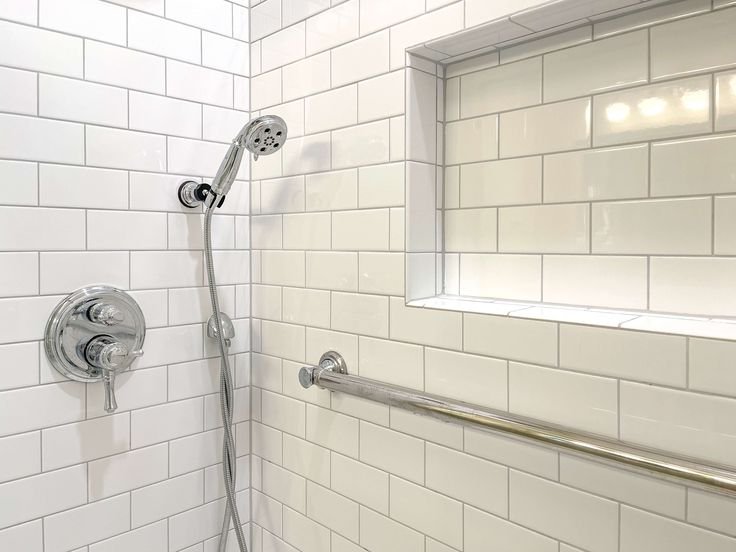
The best placement for shower grab bars follows how you move while wet.
When planning grab bars for shower installation, start with two, an entry and a side wall bar, for basic slip prevention, then add front and back wall bars for advanced support.
Where grab bars should be placed in a walk-in shower depends on its size, layout, and whether the user stands or sits. Below, we map the best location for grab bars in a shower stall.
Because shower walls must hold real weight, professional Handyman Services in Santa Monica, CA can secure each bar into studs or solid blocking so it never pulls loose.
Entry Wall Grab Bar
The entry grab bar is the most important, because most falls happen during the transfer between two heights on a wet, slick surface.
Mount a straight bar vertically, about 4–6 inches inward from the door jamb, so your hand clears the frame. An 18- or 24-inch bar suits most people; a peened finish adds grip.
It steadies you as you step over the ledge far more safely than a towel bar or glass door ever could.
Side Wall Grab Bar
When deciding where grab bars should be located in a shower, the side wall, opposite the entrance, is essential for balance as you turn and move, especially with your eyes closed under the water.
Mount a straight 24- or 36-inch bar horizontally at waist height, measured floor to top of bar. For bars under 32 inches, shift it toward the plumbing wall so more usable length sits where you stand and rinse.
Front Wall Grab Bar
The front wall bar sits on the plumbing side, near the handles and spout, steadying you while you adjust the water and showerhead.
Place a 24- or 36-inch straight bar horizontally at waist height. If it’s shorter than 32 inches, center it beneath the controls.
Paired with the vertical entry bar, an L-shaped 90-degree bar is a popular substitute here, combining vertical and horizontal grips into a single fixture for multidirectional pulling.
Back Wall Grab Bar
Opposite the fixtures, the back wall bar offers the same steadying grip as the side wall bar as you shift your weight and rinse off.
Mount a straight 24- or 36-inch bar horizontally at waist height, centering shorter bars for maximum reach.
In an extra-long shower where no one stands, enters, or exits near the back wall, you can skip this bar entirely without sacrificing safety.
Grab Bar Placement by the Toilet
A bar beside the toilet supports the lower-and-lift motion that catches many people off guard.
Mount it on the nearest side wall, or choose a fold-up (swing-away) bar that lifts out of the way when unused, ideal when there’s no adjacent wall.
Combination bars even double as toilet-paper holders, so you’re never tempted to grab a flimsy holder for balance. Set the height wherever sitting down and standing up feel steadiest.
The Best Height for Bathroom Grab Bars
There’s no mandated height for residential grab bars, but the ADA Standards for Accessible Design offer a trusted guide: horizontal bars 33 to 36 inches from the finished floor.
Treat that as a starting range, then adjust to the user, a petite person often wants bars lower than a tall one would.
Vertical bars work well at the shower entrance, while angled bars pair naturally beside a permanent shower seat.
How Many Grab Bars Do You Need
- Start with two: an entry bar and a side wall bar deliver basic slip prevention in most showers.
- Step up to four (entry, side, front, and back) for advanced support or for anyone using a shower chair.
- Add at least one bar by the toilet.
Beyond that, the right number depends on the individual’s balance, strength, and daily routine, so let a walk-through of their real movements make the final call.
Choosing the Right Grab Bar Shape and Length
Straight bars are the workhorses:
- 18 and 24 inches for the entry
- 24 and 36 inches for side and back walls
- and up to 48 inches for seated users who need a low pull
L-shaped 90-degree bars combine directions in one fixture, while wave and designer styles blend safety with décor.
Frequently Asked Questions
Where should grab bars be placed in a shower?
Place grab bars at the shower entry first, then on the side wall opposite the entrance, and add front and back wall bars for extra support. The entry bar matters most, since most falls happen while stepping over a wet, slick ledge.
What is the best height for bathroom grab bars?
There is no mandated height for residential grab bars, but the ADA Standards for Accessible Design recommend mounting horizontal bars 33 to 36 inches from the finished floor. Adjust within that range to fit the user, since a petite person often needs bars lower than a taller person would.
How many grab bars do I need in a bathroom?
Start with two, an entry bar and a side wall bar, for basic slip prevention in most showers. Step up to four for advanced support or shower-chair users, and add at least one bar by the toilet.
Should grab bars be mounted into studs?
Yes. Grab bars must be anchored into wall studs or solid blocking so they can hold real body weight without pulling loose. If a stud isn’t in the right spot, heavy-duty anchors rated specifically for grab bars can be used.
What size grab bar should I use?
Use 18- or 24-inch bars at the shower entry and 24- or 36-inch bars on the side and back walls. Seated users who need a low pull may want bars up to 48 inches.
Should grab bars be installed horizontally or vertically?
Vertical bars work best at the shower entrance to steady you as you step over the ledge. Horizontal bars suit the side, front, and back walls at waist height, while angled bars pair well with a permanent shower seat.
Do I need a grab bar next to the toilet?
Yes. A bar beside the toilet supports the lower-and-lift motion that catches many people off guard. Mount it on the nearest side wall, or use a fold-up (swing-away) bar when there’s no adjacent wall.
Can I use a towel bar or soap dish for support instead of a grab bar?
No. Towel bars, soap dishes, and glass shower doors are not built to bear weight and can break or pull free under load. Only a properly installed grab bar is safe to grip.
Are grab bars required by code in a home bathroom?
Residential bathrooms generally don’t require grab bars by code, unlike public or ADA-regulated spaces. Even so, the ADA guidelines are a trusted reference for safe placement and height in a home.
Can I install bathroom grab bars myself, or should I hire a professional?
You can install grab bars yourself if you can locate studs and anchor into solid backing correctly. Because a loose bar is worse than no bar, many people hire a handyman to guarantee each one is mounted securely.