
Your hardwood floor looks tired. There are scratches by the front door, a dull path down the hallway, and maybe a dark patch where the dog sleeps.
Before you price out new flooring, know this: most worn hardwood doesn’t need to be replaced. It needs the right level of fix. Sometimes that’s a light recoat. Sometimes it’s a full sand. And sometimes the real problem is under the floor, and no finish will solve it.
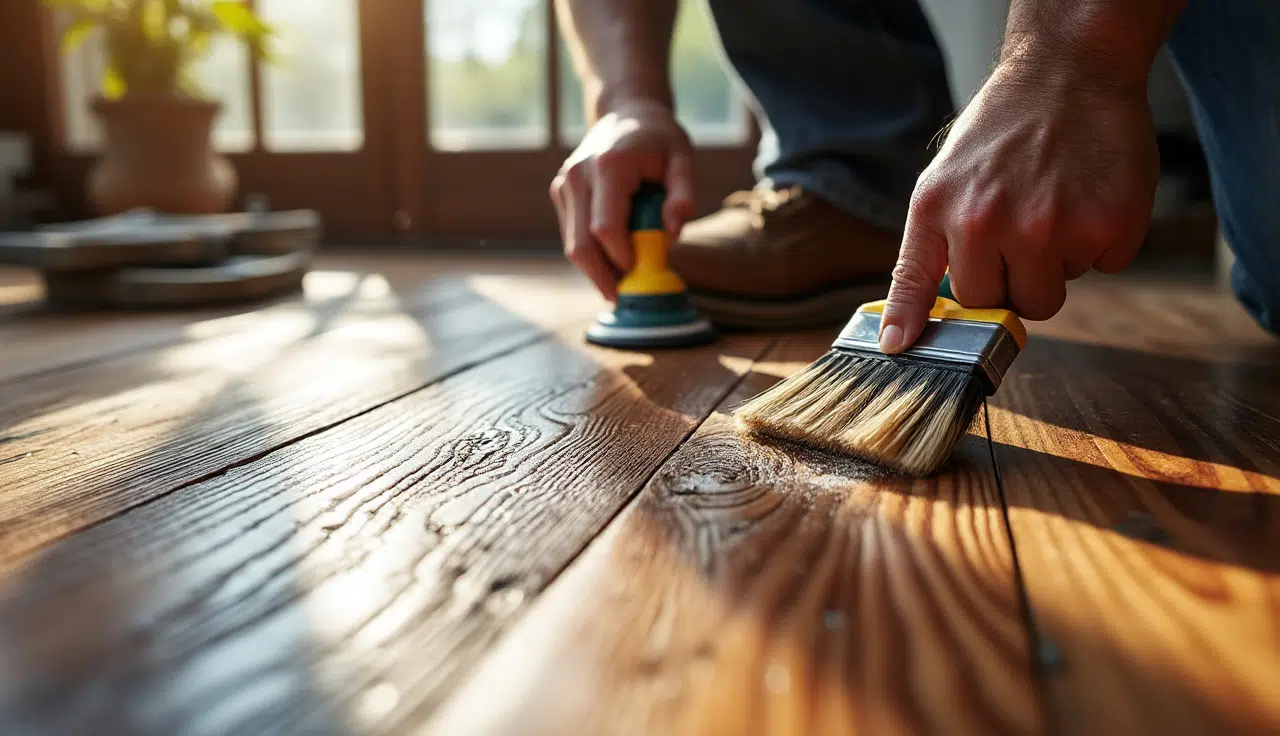
This guide helps you work out which one you’re dealing with.
Start With the Finish, Not the Color
Most people judge a floor by its color. A pro looks at the finish first, because that’s what takes the wear. The finish is the clear protective layer on top of the wood. Here’s a quick way to read what your floor is telling you:
| What you see | What it likely needs |
| Dull, hazy, or covered in fine scratches, but the wood looks fine | Screen and recoat |
| Gray or bare patches, or deep scratches into the wood | Full sand and refinish |
| Dark stains or black spots that go into the wood | Full refinish, maybe spot repair |
| You just don’t like the color | Full refinish with a new stain |
| Boards are cupped, crowned, or loose | Repair first, then decide |
Try the water-drop test. Put a few drops of water on a worn area. If they bead up, the finish is still working. If the water soaks in and darkens the wood, the finish is gone there, and a simple recoat won’t be enough.
What Is Screen and Recoat?
Screen and recoat is the lightest option. The crew lightly scuffs the old finish with a buffer. Then they apply a fresh coat on top. No sanding down to bare wood.
It’s faster, costs less, and makes less mess than a full refinish. It works best when the damage is only in the finish.
There’s one catch. A new coat has to bond to the old one. If past owners used wax or oily floor polish, the new finish may peel or look blotchy. A good pro will test for this before starting. If you’ve used polish products on your floor, tell them.
What Happens in a Full Refinish?
A full refinish removes the old finish and a thin layer of wood. That’s how it clears deep scratches and stains. A typical job goes like this:
- Inspection. The pro checks the boards, the damage, and what type of floor you have.
- Prep and repair. Furniture comes out. Loose boards get secured, and gaps and holes get filled.
- Sanding. Usually several passes, from coarse to fine, until the surface is flat and clean.
- Stain. This is where you change or deepen the color.
- Finish coats. Usually two or three coats, with light sanding between them.
- Curing. The finish dries first, then slowly hardens. Walking on it too soon can leave marks.
Sanding is the step most likely to go wrong. Hold a drum sander in one spot a few seconds too long, and it cuts a dip you can’t undo. Go too fast, and you leave swirl marks and ridges. You won’t notice any of it in the dust. You’ll see it a week later, when the afternoon sun hits the floor at a low angle, and every flaw lights up.
Can You Just Change the Color?
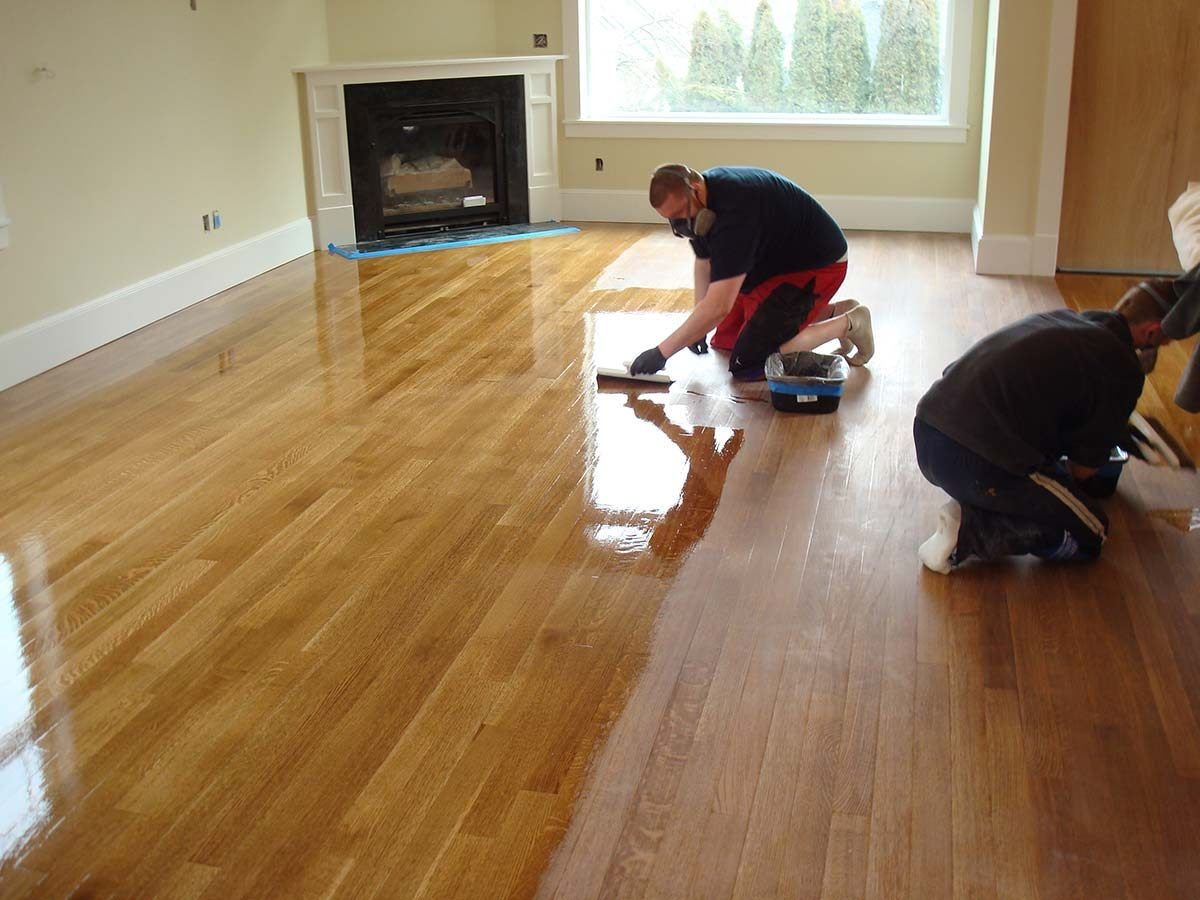
Not with a quick coat of stain. Stain needs to soak into bare wood, and your existing finish blocks it. To change the color, the old finish has to be sanded off first.
A few things to know before you commit:
- Wood species matters. Red oak, white oak, and maple take stain very differently. Maple, for example, can turn blotchy with some dark stains.
- Always request a test patch. Ask for samples on your actual floor, in your actual lighting.
- Very dark stains show everything. Dust, scratches, and footprints all stand out more.
Can Engineered Hardwood Be Refinished?
Sometimes. Solid hardwood is forgiving. It’s the same wood from top to bottom, so a good floor can be sanded and refinished several times over the decades. Engineered flooring doesn’t give you that room. Only the top layer is real hardwood, and it can be thin.
Thicker wear layers can often handle a light sanding. Very thin ones can’t, and sanding through one ruins the board. Check the product details if you have them. If you don’t, look at the edge of a board near a floor vent or at a threshold, or ask a pro to inspect it before any sander comes out.
Screen and recoat is usually safer for thin engineered floors, as long as the finish bonds properly. If you’re still choosing a floor for another room, our guide to the Best Engineered Hardwood Flooring breaks down what to look for, including wear layer thickness.
Refinish or Replace?
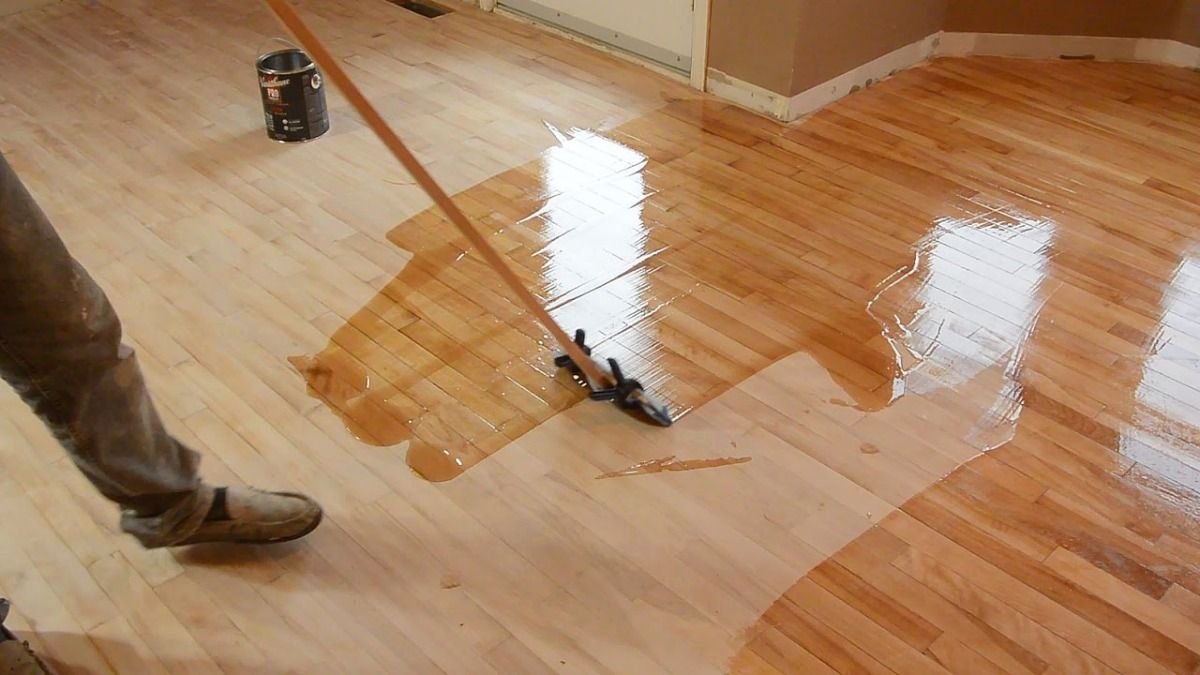
Refinishing is usually the better choice when the boards are solid, and the damage is on the surface. Replace when:
- The boards are cupped or swollen, and the moisture source can’t be fixed
- Boards are rotted, badly warped, or damaged by repeated pet accidents
- The floor has already been sanded down to the nail heads or the tongue-and-groove
- Engineered boards have almost no wear layer left
Fix the cause before you fix the surface. If a leak, crawlspace moisture, or high humidity is making the boards cup, a fresh finish will only cover it up for a while. Repair the moisture problem first. Then deal with the floor.
Questions to Ask Before You Hire Anyone
Good contractors expect these questions. Vague answers are a warning sign.
- Does my floor need a recoat or a full refinish, and why?
- Can my flooring be sanded safely?
- What repairs should happen first?
- Which stain and finish will you use, and why?
- How will you control dust?
- How many days will the room be off-limits?
- When can I move furniture back? When can I put rugs down?
- What does your estimate include? Are there extra charges for moving furniture or fixing boards?
Get the answers in writing. Take photos of your floors before work starts, too.
The Bottom Line
A worn hardwood floor isn’t automatically a dead floor. See whether the damage is in the finish or in the wood. Tackle moisture issues or structural problems first. Now choose the lightest option to solve the problem. It could be recoating or sanding.
Handyman & More helps homeowners with the work around a refinish, like prep, trim repairs, and small fixes. Take a look at our Local Handyman Services in Los Angeles, CA or see our Handyman Services in Culver City, CA if you’re closer to the westside. Tell us what’s going on with your floor, and we’ll tell you honestly what’s worth doing.